


Life and death of migrants and pioneers in 19th-century Ohio. The case of the Harrison Township Cholera Cemetery
Alessandro Cariboni – Francesco Coschino – Giuseppe Vercellotti
Published in Archeologia Postmedievale, vol. 29 (2025).
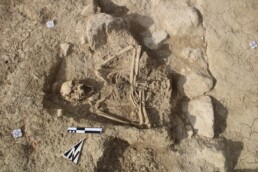
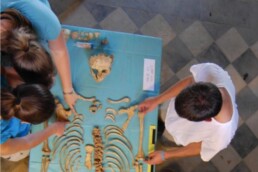
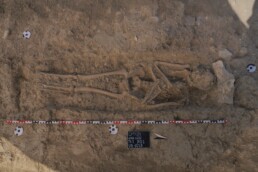
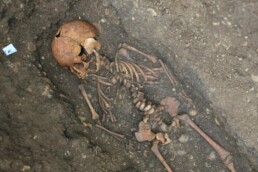
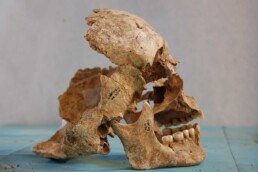
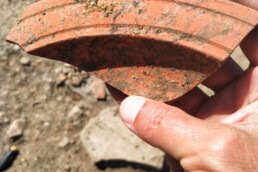
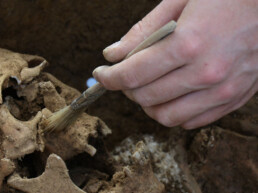
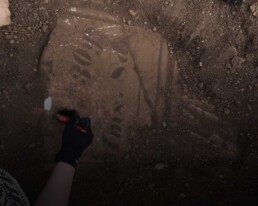
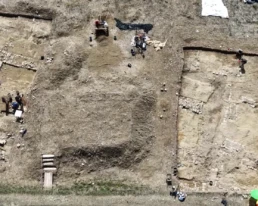
The article presents the results of over a decade of research carried out within the Harrison Township Cholera Cemetery (HTCC) Project, an excavation directed and managed by IRLAB – Institute for Research and Learning in Archaeology and Bioarchaeology, in collaboration with The Ohio State University.
By integrating bioarchaeological, topographical, and anthropological approaches, the study reconstructs the life conditions of Irish and German migrant communities involved in the construction of the Ohio & Erie Canal and affected by the cholera epidemics of 1833 and 1849.
Despite the near-total loss of original gravestones, the research has made it possible to identify individuals, family relationships, and patterns of trauma and disease, transforming an apparently unremarkable burial ground into a significant biological and social archive of the 19th-century American Midwest.
Journal: Archeologia Postmedievale (Italy)
Edited by: Marco Milanese